
From the Straw to the Sheets: Why Brand Consistency Is an Operations Problem

A guest at your inn touches maybe forty things between the parking lot and falling asleep.
The door handle. The pen at check-in. The key or the keycard. The carpet under their shoes. The light switch. The hanger in the closet. The remote. The glass by the sink. The soap. The towel. The sheets. The pillow.

Every one of those objects is telling them something about you. And here is the part most own
ers miss: they are not evaluating each item individually. They are forming one impression from all of it at once, and they will never be able to articulate which specific thing created it.
They will just say the place felt nice. Or it did not.
That gap between what you think your brand is and what your guest actually touches is the most common problem I see in hospitality, and it is almost never a marketing problem. It is an operations problem wearing a marketing costume.
THE STRAW PROBLEM
Let me start with the smallest possible example, because small examples make this visible.

You run a nice inn. Reclaimed wood, local art, a genuinely thoughtful breakfast. The whole property says careful, consi
dered, worth the rate.
Then someone orders an iced tea and it arrives with a bendy plastic straw with a red stripe. The kind that comes 500 to a bag for four dollars.
Nothing is wrong with that straw. It works. Nobody is going to complain. Nobody is going to leave a review about it.
But it does not match. And the guest registers that mismatch somewhere below conscious attention. Not as "the straw is wrong" but as a very slight, unnameable deflation. The property said one thing and this object said another.
Multiply that by forty touchpoints and you have the actual explanation for why some properties feel expensive and some f
eel like they are trying to.
WHY THIS HAPPENS TO GOOD OPERATORS
This is not a taste problem. The owners I work with usually have excellent taste. It is a purchasing problem.
Here is the mechanism, and it is almost always the same.
The property gets designed all at once. Somebody thinks hard about the aesthetic. Everything is chosen deliberately, and on opening day it is coherent.
Then the business starts running.
The original towel supplier discontinues the line. You need towels this week. You order the closest available thing from the restaurant supply catalog because a guest is arriving Friday.
The nice pens run out. There is a box of promotional pens from a vendor in the office drawer. Those go on the desk temporarily.
The original soap gets expensive. You switch to something cheaper and tell yourself you will revisit it.
None of those decisions is wrong. Each one was correct in the moment, made under time pressure, by someone solving a real problem. But there was no system holding the standard, so the standard drifted one substitution at a time.
Three years in, the property is a collage of emergency decisions, and the owner cannot figure out why it does not feel like it used to.
THE FIX IS NOT DESIGN. IT IS A PURCHASING STANDARD.
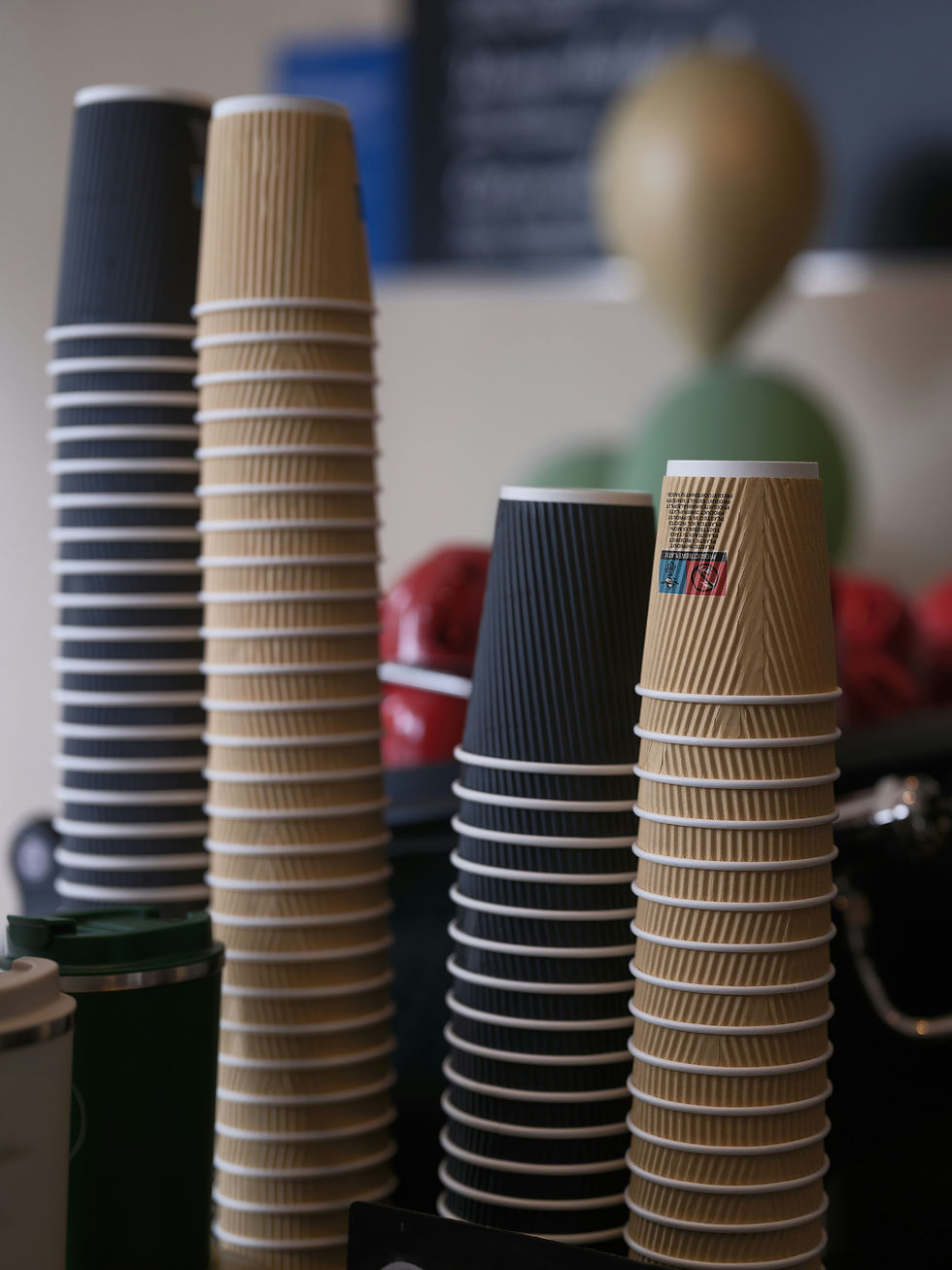
Most people, when they notice this, reach for a designer. That is the wrong move, or at least an incomplete one. A designer will fix the current state. Six months later it drifts again, because the mechanism that caused the drift is still running.
What actually holds is a purchasing standard. A written document that says, for every recurring physical item on the
property, what it is and where it comes from.
Not a mood board. A list.
Here is roughly what that looks like:
ITEM SPEC SOURCE REORDER AT
Bath towel White, 600gsm, 30x56 [supplier] 20 units
Hand soap [brand], unscented [supplier] 6 units
Guest pen Matte black, no logo [supplier] 24 units
Straw Kraft paper, unwrapped [supplier] 2 boxes
Coffee cup Stoneware, 8oz, cream [supplier] 12 units
Boring. Genuinely boring. And it is the single highest-leverage document a hospitality property can have, because it converts a taste decision into an operational one.
Now when the towels run low, whoever handles ordering does not make an aesthetic judgment under time pressure. They reorder the spec. The standard holds without requiring the owner to be in the room.
That is what I mean when I say brand consistency is an operations problem. The design work is maybe fifteen percent of it. The other eighty-five percent is building a system that prevents drift.
WALK YOUR OWN PROPERTY
Here is an exercise worth two hours.

Check in as a guest. Actually do it. Park where they park, walk where they walk, and go through the entire arrival sequence without skipping anything because you already know how it works.
Write down every physical object you touch or look at closely, in order.
Do not evaluate yet. Just list.
Then go back through the list and mark each item with one of three things:
ON BRAND. This object says what I want the property to say.
NEUTRAL. Fine, invisible, does not help or hurt.
OFF BRAND. This does not match. It is a substitution that stuck, or it is cheap in a way the guest can feel.
Most owners doing this for the first time find somewhere between six and fifteen items in that third category. And they are almost always surprised by which ones, because the offenders are usually the items nobody thinks of as brand items. The trash can. The shower curtain liner. The paper on the breakfast tray. The card on the pillow, printed on the wrong stock.
PRIORITIZE BY TOUCH, NOT BY COST
Once you have the list, do not fix it in order of price. Fix it in order of how much the guest interacts with it.
Sheets and towels are touched for hours. They matter enormously and they are usually the most expensive thing to fix, which is why they get deferred, which is why they are frequently the biggest problem.
The coffee cup is held for twenty minutes twice a day.
The pen is used for eleven seconds.
Fix in that order. Duration and intimacy of contact predict impact far better than what the item costs you.
And be honest about the linens. In lodging, the bed is the product. Everything else is context. A property with mediocre sheets and beautiful common areas is a property that people describe as pretty but do not return to. Guests may not consciously evaluate thread count, but they absolutely evaluate whether they slept well and whether the bed felt like something they would want at home.
THE SUSTAINABILITY ANGLE, SINCE IT COMES UP
A lot of hospitality operators want to make more responsible purchasing choices and stall out because the sustainable option costs more per unit.
Sometimes that is true. Often it is not, once you account for durability.
Better linens last through more wash cycles. Real glassware does not get replaced quarterly. Refillable dispensers eliminate a recurring per-guest cost. The cheap version is frequently more expensive over eighteen months, but the cheap version shows up on this month's invoice and the replacement cycle does not show up anywhere at all.
This is also a place where the sustainable choice and the brand choice tend to converge. Kraft paper straws look better than plastic ones on a wood table. Ceramic reads as more considered than disposable. Refillable dispensers look more intentional than a basket of tiny bottles.
You do not have to choose between the responsible option and the one that looks right. Most of the time they are the same option.
WHAT THIS ACTUALLY GETS YOU
Consistency does something specific for a hospitality business, and it is not aesthetic satisfaction.
It supports your rate. Properties that feel coherent can charge more than properties that feel assembled, even when the underlying quality is comparable. Guests are not pricing your amenities. They are pricing an overall impression, and coherence is most of that impression.
It reduces decision load. When the standard is documented, ordering stops being a judgment call. That is time back and it is one less thing that requires you specifically.
It shows up in reviews as vague praise. "Everything was perfect." "So well thought out." Guests rarely name the specific things. They name the feeling. The feeling comes from the accumulation.
And it holds when you are not there. Which is the actual test of any system.
START WITH ONE ROOM
Do not overhaul the property. Pick one room, walk it as a guest, list every object, mark the off-brand ones, and fix those.

Then write down what you chose and where you got it, so the next person ordering does not have to guess.
That document is the thing that lasts. The room is just where you started.
Run an inn, a B&B, a vacation rental, or a venue? This is the kind of work I do, and the first conversation is free.



Comments